The number you'll never see.
Every published result is a ceiling, not a promise.
Thomas Bulkowski's "Encyclopedia of Chart Patterns" measured more than 38,500 chart patterns, the recurring shapes traders base decisions on, and gave each one precise statistics. One result stands out: a pattern called the high and tight flag returns, on average, +69% in a rising market. Before that number convinces you, look at what sits behind it.
That figure is not a typical result. It is the average of 253 perfect trades. In each one the buy happened exactly at the breakout (the moment price breaks through the boundary of the pattern) and the sell exactly at the peak, the highest point before price fell at least 20%. No commissions. No taxes. Nothing deducted.
The book assumes you buy at the breakout and sell at the exact top. But the top is only visible in hindsight. In reality you enter a little later and exit a little earlier. Same pattern, smaller slice.
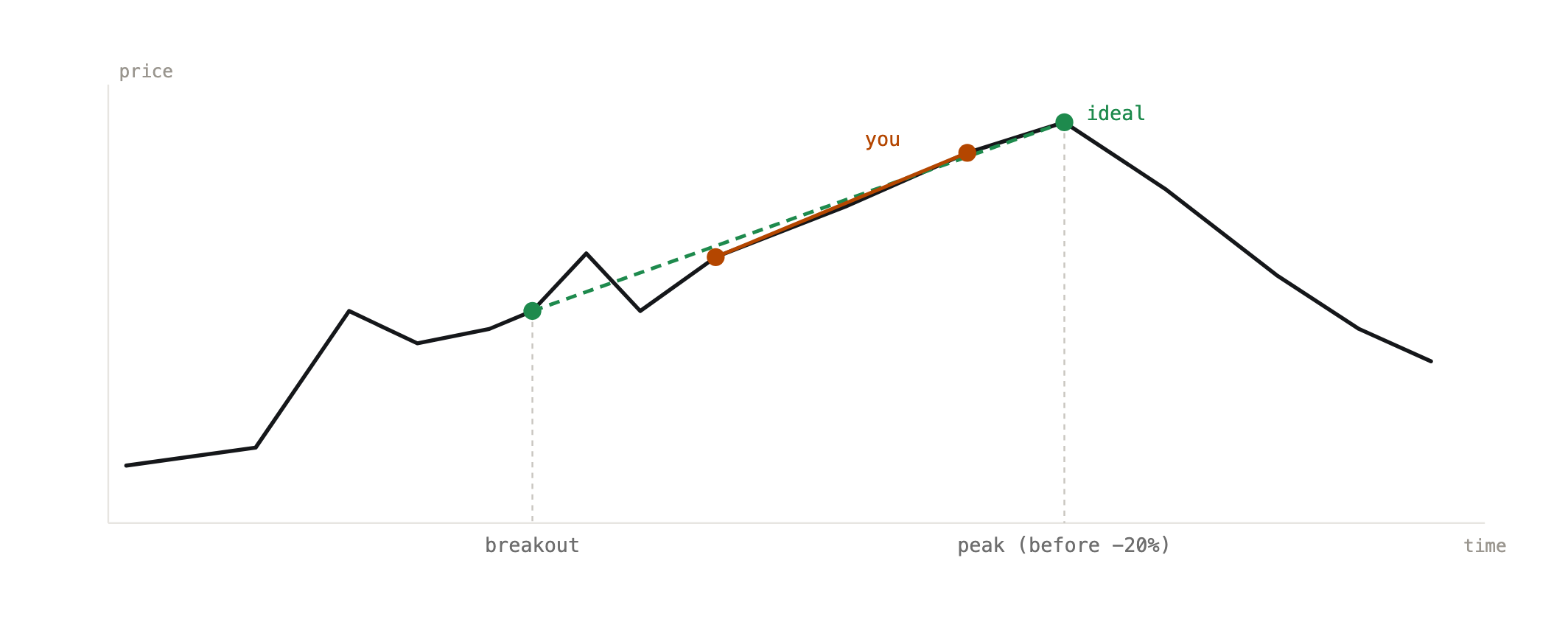
Every real trade gives back a little against the theory. You rarely enter right at the breakout. You pay a cost on every trade. And about half the time price comes straight back after the breakout before it continues (a move traders call a throwback), which eats into the result further. Bulkowski devotes a section of his own introduction to exactly this, titled "I don't believe these numbers". The man who measured them is the first to tell you the ideal is not what you will earn.
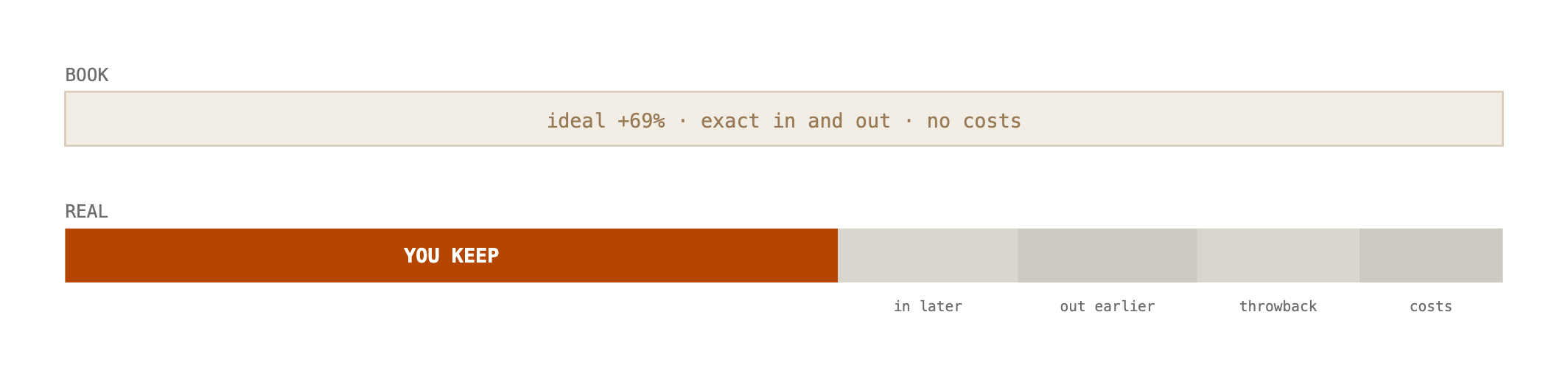
The same logic holds for every published number. Average return, backtest, historical statistics: they all describe ideal conditions. Useful for comparison, but not what you actually put in your pocket. The problem is not the number. The problem is how it is read. Someone who expects the headline figure and earns less feels cheated and quits, almost always at the worst moment, at the bottom of a drawdown, just before the turn.
Don't ask first how much it earns on average. Ask three other things:
The most valuable column in Bulkowski's book is not the average rise. It is the failure rate, how often the pattern simply doesn't work. The gap between one pattern and the next is enormous.
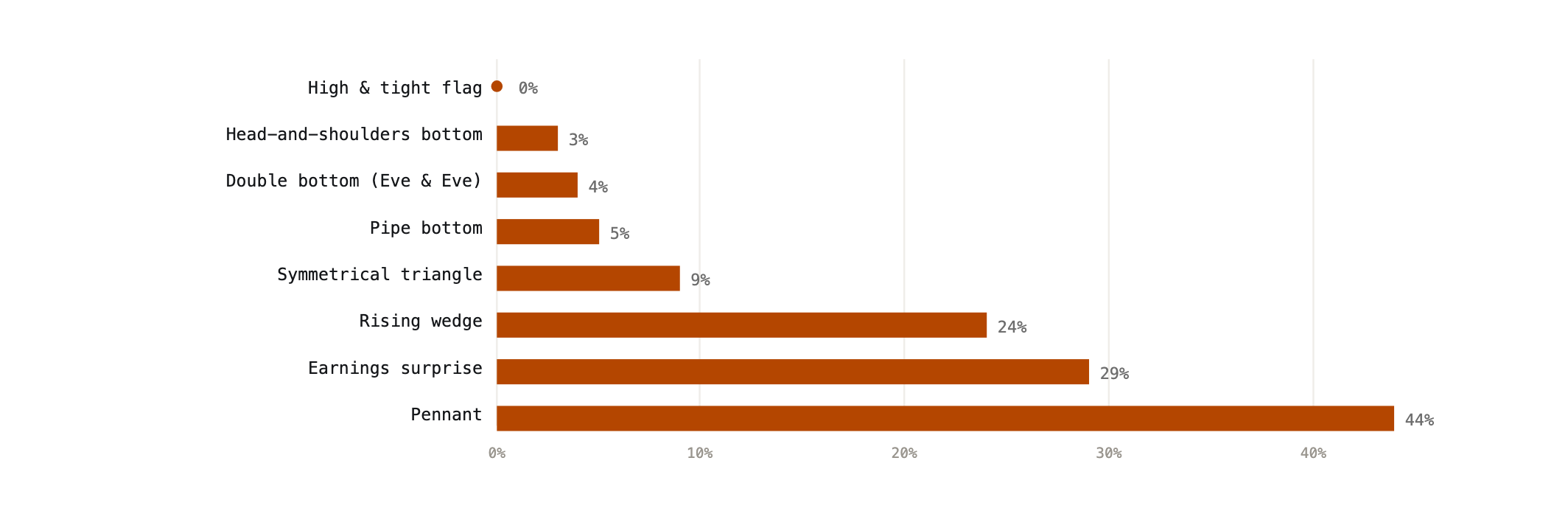
The best pattern fails almost never. The worst fails almost half the time. If you look only at the average return, you cannot see which of the two you are buying.
The headline number tells you how well it can go. The failure rate and the drawdown tell you whether you can live with it. The first is hope. The second is a plan.
We start from the other end. We talk about drawdowns and expectations before returns, because the right expectation is the only thing that keeps you in the game long enough for the statistics to work in your favour. The number you will never see is that ideal +69%. The number that matters is the one you can actually sit through.
Educational material. This is not investment advice or an offer to buy or sell. Past results do not guarantee future results.
Nice Trader OÜ · LEI 6488HT10Z91OQ3PO8252 · Tallinn, Estonia